Uncolonized and Modernised: How Thailand’s Independence Shaped Its Financial Future
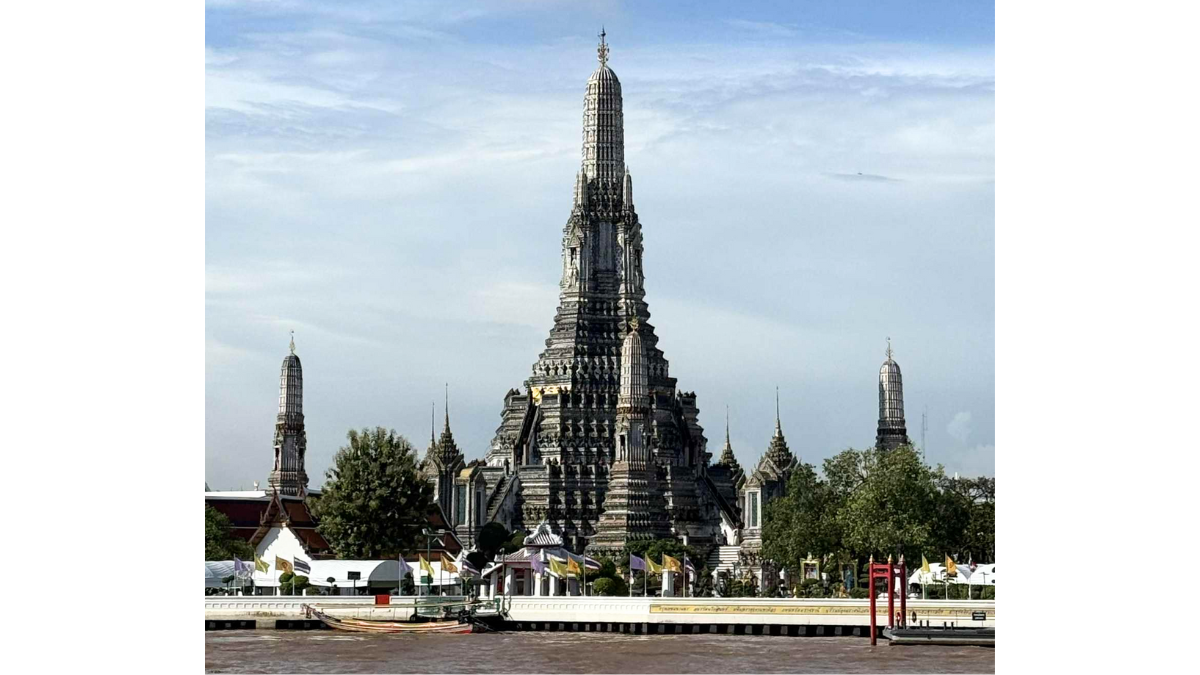
Independence doesn’t stem from rooting yourself in one place. Oftentimes, one must adapt to the changing tides to survive, thrive and eventually achieve independence.
To Bangkok, Thailand!
“Be humble and avoid vengefulness.”
— King Chulalongkorn (King Rama V)

Bangkok, Thailand, a city where tradition and modernity coexist beautifully. On one hand, it’s as
modernised as any global city, yet everywhere you turn, the country’s deep respect for its culture and beliefs remains alive.
Towering skyscrapers stand tall beside centuries-old Buddhist temples. Small shrines, known as spirit houses, stand outside homes and businesses, offering daily glimpses into the blend of Hindu and Buddhist beliefs that shape Thai life.
I couldn’t help but wonder what the Philippines might look like if it had never been colonised. Because Thailand is unique, the only nation in Southeast Asia that was never conquered by Western powers during the great colonisation period.
That independence has its rewards: the preservation of language, writing, culture, faith, and most importantly, sovereignty.
Bangkok stands today as the seat of power, modernisation, and financial transformation of Thailand—a living proof of what an uncolonized nation can achieve when it charts its own course.
And as I’ve promised myself, in every country I visit, I’ll explore its financial transformation and history. Because a nation’s growth is inseparable from its capital and resources. And where there’s growth, there’s always a stock exchange.
The Southeast Asian Nation That Never Fell
“khun-khâa-khǎawng-khon-yùu-thîi-phǒn-ngaan
The value of a man comes from his works.”— Thai Proverb

While much of Asia’s financial and political roots were shaped by colonial powers, Thailand, once known as Siam, wrote its own story. It’s the only Southeast Asian nation that was never colonised.
The name “Thailand” literally means “Land of the Free.” And true to its name, it remained free during an era when almost every neighbour had fallen under European rule.
In the 19th century, the British controlled the lands to the west and south of Thailand (modern-day Myanmar and Malaysia), while the French occupied the territories to the east (modern-day Vietnam, Cambodia, and Laos). In between these competing empires stood Siam — uncolonized, unbroken, and independent.
But that independence wasn’t luck. It was strategy, diplomacy, and leadership which was embodied by King Chulalongkorn (King Rama V). He was the architect of modern Siam, guiding the country through one of the most delicate political periods in Southeast Asian history.
King Rama V used Thailand’s geography to his advantage, which was a natural buffer state between the British and French territories. He built strong diplomatic relationships with both sides, ensuring neither saw Siam as a threat nor an easy conquest. At home, he initiated reforms that changed the country’s trajectory forever. He transformed it from a traditional monarchy into a modern constitutional one, mirroring the British model in structure but retaining its unique cultural roots.
Instead of resisting modernisation, King Rama V embraced it. He sent Thai scholars abroad, adopted Western governance systems, modernised education, and gradually abolished slavery. His reign didn’t just preserve Thailand’s sovereignty; it laid the foundation for a modern financial and economic system. One that would, over time, give rise to the stable Thai Baht and the Stock Exchange of Thailand (SET).
Thailand didn’t just survive colonisation. It adapted, modernised, and thrived, standing today as a rare example of a nation that balanced tradition and progress, remaining culturally proud, politically independent, and economically resilient.
The Thai Baht: A Symbol of Sovereignty

If there’s one symbol that reflects Thailand’s independence and resilience, it’s the Thai Baht (THB), the country’s official currency and one of the oldest in Asia still in use today.
The Baht traces its roots back to the 13th century, when it began as a unit of weight for silver coins known as “Tical.” Unlike other Southeast Asian currencies influenced by colonial powers, the Baht evolved on Thai terms. It was first formalised in 1897 under King Chulalongkorn (King Rama V), who introduced a decimal-based monetary system and pegged the Baht to global standards. This aligned Thailand’s economy with the rest of the world.
For decades, the Baht stood as a symbol of national pride and economic order. But its greatest test came in 1997, during the Asian Financial Crisis. It is a turning point not just for Thailand, but for the entire Southeast Asia region.
Leading up to the crisis, Thailand enjoyed years of rapid economic expansion. Foreign investments poured in, asset prices surged, and capital flowed freely from global funds chasing Southeast Asia’s so-called “economic miracle.” The Baht was pegged to the U.S. dollar, which kept trade stable but made the currency increasingly vulnerable.
Thailand wanted to rise as a regional financial hub, like Singapore or Hong Kong. To do that, it opened its markets and built the infrastructure to attract foreign capital. It worked, until it didn’t. Beneath the boom were growing cracks: an overheated Thai asset market, rising debt, and a banking system not strong enough to handle the pressure.
Then came 2nd July 1997, the day that changed everything. The Bank of Thailand was forced to abandon the Baht’s fixed peg to the U.S. dollar, letting it float freely. This event caused the house of cards to crash.
This led to the Baht losing almost half its value relative to the US dollar, and what started as a local currency issue quickly spiralled into a full-blown regional financial meltdown. There were a lot of factors that led to the Southeast Asian crisis, and the Thai Baht event was just the final straw that broke the cracks of the Southeast Asian financial system. It is the years of unchecked capital inflows, rising debt, speculative investments, and fragile banking structures that all came crashing down at once.
Thailand’s economy contracted sharply. Companies defaulted. Foreign investors pulled out. What began as a national crisis soon became an international one — later remembered as the “Tom Yum Goong Crisis,” named after Thailand’s famous spicy soup, because of how quickly the financial heat spread across Asia. The Photo above is a depiction of it, the Thai Baht on the Tom Yum Soup.
Despite this, Thailand adapted and rebuilt. The government overhauled its financial system, implemented stricter monetary policies, and strengthened the Bank of Thailand. It was a painful lesson, but one that produced lasting reform, a more transparent, disciplined, and resilient financial framework.
Fast forward to today, the Bank of Thailand stands among the most respected central banks in Asia, known for its credibility and cautious approach in balancing growth, inflation, and currency stability. The Baht, once triggered a regional financial collapse, is now one of Southeast Asia’s most actively traded currencies.
Through centuries of change, from silver coins to digital banking, from crisis to recovery, the Thai Baht remains a reflection of Thailand’s sovereignty, adaptability, and strength.
The Evolution of the Thai Capital Market

Thailand’s capital market didn’t emerge overnight. It was decades in the making, built through trial, failure, and reform.
It all began in 1962, with the creation of the Bangkok Stock Exchange (BSE). It was Thailand’s first attempt to build a formal stock market, but without government backing and the Thais’ limited understanding of the equity market, trading volumes dwindled, and the exchange shut down in the early 1970s.
Yet, the idea didn’t die. During 1967–1971, under the Second National Economic and Social Development Plan, the government began to seriously consider building a stronger capital market. With guidance from the World Bank and economist Professor Sidney M. Robbins from Columbia University, Thailand drafted a blueprint for its future financial system, a plan that would become the foundation of today’s market.
In 1974, the vision became reality with the Securities Exchange of Thailand Act, marking the official birth of the Stock Exchange of Thailand (SET). It provided structure, regulation, and a mission: to mobilise domestic savings and channel them into productive investments.
The evolution of the SET shows that a thriving capital market requires two key ingredients: strong support from the government, collaboration between the government and the private sector, and continuous financial education for the public.
Fast forward to 2016, the SET opened its new modern headquarters on Ratchadaphisek Road, Din Daeng District.
And now, in 2025, the SET celebrates its 50th anniversary, not just as a financial institution but as a force driving initiatives that promote financial literacy, healthcare development, and inclusive growth.
From the quiet failure of the BSE to becoming one of Asia’s most respected stock exchanges, Thailand’s capital market is a story of persistence, one that mirrors the country’s own journey of independence and modernisation.
I Hope and Dream That All Stock Exchanges Worldwide Adopt This

My reason for visiting Thailand was simple, family bonding and enjoyment. It wasn’t meant to feed my curiosity for history, money, and global finance. In fact, I didn’t even have an itinerary for it.
But as usual, I couldn’t resist. I still made time to visit the Stock Exchange of Thailand (SET), because just like my previous explorations in Amsterdam, Prague, and Paris, I wanted to understand how another country tells its financial story.
As of year 2025, the Stock Exchange of Thailand (SET) has 821 publicly listed companies with a domestic market capitalization of $563 billion based on https://sseinitiative.org/exchanges-filter-search data.
As I stood before the SET building, I was in awe. The structure was towering, even taller than Euronext Amsterdam, Euronext Paris, and the Prague Stock Exchange. I took a few photos and left, as we had other plans that day, but part of me wished I could have stayed longer.
Why? Because Thailand’s stock exchange has something that even the largest exchanges in the world don’t. A museum dedicated to teaching about finance and investing.
It’s called the INVESTORY Investment Discovery Museum (INVESTORY พิพิธภัณฑ์เรียนรู้การลงทุน). It is a place designed to teach visitors, young and old, about the basics of investing, the importance of stock exchanges, and how financial markets shape a nation’s growth.
Opened in 2003, the museum is part of SET’s long-term mission to promote financial literacy in Thailand. It’s interactive, accessible, and engaging. Kids collect points using an RFID “HERO Card” as they play and learn about investing. You’ll find it on the ground floor of the Stock Exchange of Thailand building. It is something I wish every stock exchange in the world would have.
As I mentioned in The Evolution of the Thai Capital Market, Thailand’s first stock exchange —the Bangkok Stock Exchange (BSE)—failed due to a lack of government support and the public’s limited understanding of equities. But fast forward to today, and you’ll see how much has changed.
The Thai government supported capital market reforms, the SET strengthened regulation, and most importantly, they invested in education, because financial growth starts with financial understanding. The INVESTORY Museum stands as living proof of this transformation.
If I were given the chance to return to Bangkok, visiting this museum will be at the top of my list.
Below is a video introduction of the INVESTORY Investment Discovery Museum, which was taken from SET YouTube channel.
A stock exchange with its own museum and interactive learning space is a necessity. It builds a society that understands how capitalism works and empowers people to leverage the market to achieve their financial goals.
I genuinely hope and dream that all stock exchanges worldwide adopt something similar, because even the largest ones, like the New York Stock Exchange, London Stock Exchange, and Euronext, don’t have one.
Though interestingly, there is one among the top five largest stock exchanges by market capitalisation worldwide that does, and I’ve visited it too.
What country is that you asked? Here’s a clue: Arigato gozaimasu. 😉
That will be for my next blog. 😁
The SET 50 index

Every major exchange has a benchmark index. For Thailand, it’s the SET 50 index, which is ablue-chip benchmark that tracks the stock price movement of the 50 largest and most liquid common stocks listed on the Stock Exchange of Thailand (SET).
As of 07 November 2025, here are the top 10 heavyweights in the SET 50 Index:
| Company | Ticker Symbol | Industry | Quick Note |
| Advanced Info Service Public Company Limited | ADVANC | Telecommunications / Mobile Services | Thailand’s largest mobile-network provider, offers mobile, broadband & digital services. |
| Kasikornbank Public Company Limited | KBANK | Banking / Financial Services | One of Thailand’s major banks, strong retail & corporate banking presence. |
| True Corporation Public Company Limited | TRUE | Telecommunications / Digital Media | A sizable telecom and digital-media player in Thailand, evolving beyond traditional telco. |
| Krung Thai Bank Public Company Limited | KTB | Banking / Government-Owned Bank | A large state-owned bank with wide network and significant government support. |
| Delta Electronics (Thailand) Public Company Limited | DELTA | Electronics / Industrial & Tech Manufacturing | Major manufacturer of power supplies, automation solutions & energy-efficient electronics based in Thailand. |
| Bangkok Bank Public Company Limited | BBL | Banking / Financial Services | One of Thailand’s oldest and largest commercial banks with strong regional presence. |
| SCB X Public Company Limited | SCB | Banking / Financial Services (Holding Company) | Modernised version of the legacy Siam Commercial Bank group, oriented for digital banking & investment. |
| Bangkok Dusit Medical Services Public Company Limited | BDMS | Healthcare / Private Hospitals & Medical Services | Thailand’s largest private hospital operator, across Thailand and neighbouring countries. |
| Bumrungrad Hospital Public Company Limited | BH | Healthcare / International Hospital Services | Internationally-recognized hospital in Bangkok, strong in medical tourism and premium healthcare services. |
| PTT Global Chemical Public Company Limited | PTTGC | Petrochemicals / Chemical Manufacturing | Large integrated petrochemical company in Thailand, part of the broader energy/chemical value chain. |
To Sum It Up

Thailand’s story is unlike any other in Southeast Asia. A nation that never fell under colonial rule yet rose to become one of the region’s most resilient economies. Its independence wasn’t just political; it was intellectual and financial. Through leadership, foresight, and reform, Thailand built its own identity, which was uncolonized, and modernised.
From the silver Tical coins of the 13th century to the Thai Baht of today, Thailand’s currency mirrors its strength: adaptable and sovereign. Even the 1997 Asian Financial Crisis, which once shook the region, became a turning point that shaped a stronger, wiser financial system.
The Stock Exchange of Thailand (SET) stands today as a symbol of that journey, from the quiet failure of the Bangkok Stock Exchange in the 1960s to a 21st-century financial powerhouse leading in innovation, regulation, and education. Its INVESTORY Museum, dedicated to teaching the public about investing.
Finance, after all, is not just numbers or markets. It’s culture, policy, and the collective pursuit of progress. And Thailand reminds us that true modernisation doesn’t mean erasing one’s identity and tradition, it means evolving while staying rooted in it.
Stock Stops: Fourth Stop Passport Stamped!

If you want to know more about the stock exchanges I’ve visited and plan to visit. See my Stock Stops page, where I shared details about my lifetime intention to visit each country with a stock exchange.
It is where my passion for finance and investing crosses with my increasing curiosity about the world.
“Life is about creating and living experiences that are worth sharing.”
— Steve Jobs
Knowledge is my Sword and Patience is my Shield,
Evan Louise Madriñan / elmads
This blog is for informational purposes only and not a Financial Recommendation. Not all information will be accurate. Consult an independent financial professional before making any major financial decisions.


0 Comments