How The Port of The Indies Built a Global Superpower
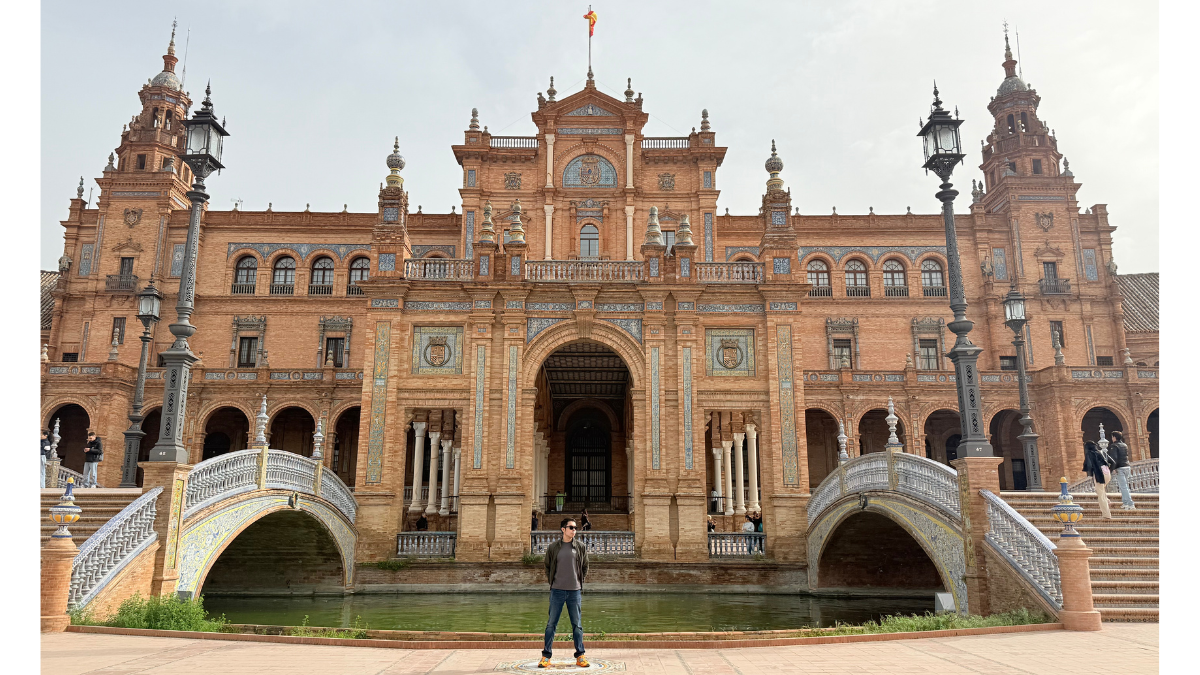
Seville, Silver and The Spanish Empire.
A Sevilla España
The land of oranges, flamenco, and tapas.

Who would have thought that the first city I would visit in Spain would be Seville? Truth be told, I knew nothing about this city until my wife mentioned it to me in 2025.
She wanted somewhere different in 2026. A city less crowded than the world’s megacities like Paris, London, or New York City. Somewhere we could enjoy warm sunshine and escape the cold weather of the first quarter in the UK.
At first, I wasn’t convinced.
I knew Spain, of course. How could I not? The country had ruled the Philippines for 333 years (1565–1898). I was familiar with the great cities of Madrid and Barcelona, but Seville was never on my radar.
Still, like with all our travels, curiosity took over. I started researching the city.
And then, a gust of excitement hit me. Why not?
Seville’s history is as deep and rich as the entire Iberian Peninsula itself. More importantly, it once served as the Port of the Indies, the gateway through which the wealth of the New World flowed into Spain. From this very city rose the foundations of the Spanish Empire—the world’s first true global superpower.
Suddenly, Seville to me wasn’t just a travel destination.
It was a place where history, empire, and exploration once converged. It was the next perfect destination for my Stock Stop Series—though, ironically, it never had its own stock exchange. hehe!
My curiosity has been piqued; my amazement has been kick-started.
I told my wife, to Sevilla España we go!
The Al-Andalus—The Muslim land of Iberia

To most of us, Spain is the country that gave the world a creative and unrivalled painter like Pablo Picasso. It is also the birthplace of one of the most widely spoken languages on Earth—Español, and home to global companies like Inditex, whose flagship brand Zara dominates high streets around the world.
To others, Spain is remembered as the empire that helped map the world, with explorers such as Christopher Columbus.
But fewer people, especially those outside Europe or the field of history, realise that more than half of Spain, nearly the entire Iberian Peninsula, was once ruled by Muslims beginning in the 8th century.
Yes, more than half of Spain lived under Islamic rule.
To understand how this happened, we have to turn the clock back to the collapse of the Western half of the Roman Empire in the 5th century AD. As Rome’s grip over the peninsula weakened, control over Hispania, Rome’s name for the region, began to fade. This wider collapse eventually culminated in the Fall of the Western Roman Empire in 476 AD.
And history often follows a familiar pattern: when a great power withdraws, new forces move in.
That is exactly what happened.
As the power vacuum spread across Europe, different groups competed to claim the territories Rome left behind. In the Iberian lands of Hispania, the Visigoths (a major Germanic tribe that branched from the Goths) took control of the peninsula. They established the Visigothic Kingdom and ruled for nearly three centuries.
Their rule effectively collapsed beginning in the year 711.
That year, forces of the Umayyad Caliphate crossed into the peninsula. According to historical accounts, the commander Tariq ibn Ziyad landed near a massive rock at the southern tip of Iberia. The place became known as “Jabal Tariq,” or the Mount of Tariq, a name that eventually evolved into Gibraltar.
From that moment forward, the Umayyad forces—whose capital lay in Damascus, Syria—took over roughly seven years to conquer much of the land of Spain. The Caliphate continued to expand across the peninsula. After years of conquest, they controlled the majority of Hispania. They named this territory Al‑Andalus.
Among the cities under this rule was Seville, located in what is today the region of Andalusia.
So why share this story?
Because when you visit Seville today, you immediately notice something unusual. The city carries a striking blend of Islamic and Catholic influences, which is visible in its buildings, arches, courtyards, and decorative patterns.
Without knowing the historical backdrop, you might wonder why a church sometimes carries architectural elements that feel unmistakably Islamic.
Yet that is precisely what makes Seville remarkable.
Its streets and structures quietly reveal centuries of layered history, where cultures, religions, and empires once overlapped, leaving their mark on the same stones.
Hispania

Hispania’s largest kingdoms of Castile-León and Aragón gradually reclaimed lands once taken by the Umayyad Caliphate.
By 1479, under the Catholic Monarchs, these kingdoms unified. Hispania was no longer a fragmented land; The foundations of what we now know as Spain were laid through a powerful dynastic union.
It was a decisive moment. But more importantly, it was just the beginning.
What followed was the Spanish Golden Age, sparked not only by unity, but by ambition—helped in no small part by a man bold enough to challenge the limits of the known world: Christopher Columbus.
The Admiral of the Ocean Sea

As written on the coat of arms in the photo, “A Castilla Y A Leon. Nuevo Mundo dio Colón“, which means, “To Castile and León, Columbus gave a new world.“
Christopher Columbus was Italian, born to a wool weaver, who found his way to the sea at a young age. He eventually settled in Lisbon, arguably the “Silicon Valley” of maritime exploration at the time. There, he became a self-taught mapmaker and a master navigator.
He had an ambitious idea, which, for most of that time, was nothing more than a pipe dream.
He wanted to find a direct sea route to the East Indies (Asia) by sailing west. The goal was simple: bypass the “middlemen” of the Silk Road and the Ottoman Empire, both of whom heavily taxed the spice trade.
The problem was his math.
He believed the Earth was much smaller than it is. He estimated the distance from Europe to Japan was only about 2,400 miles (it is actually over 12,000 miles). Sail west and reach the east.
His story of finding financial backing is a narrative of one of the greatest capital funding in world history.
Christopher Columbus was a tenacious founder. He spent nearly a decade pitching his ideas to raise capital for his westward maritime exploration. He was faced with rejection after rejection, but he was undeterred.
He believed. And that was enough to keep him going.He approached the monarchies of various kingdoms in Europe.
Portugal. He first approached the Portuguese court. Their experts correctly calculated that the Earth was much larger than Columbus claimed. They passed. Their bet was already placed, sailing around Africa, a route later completed by Vasco da Gama.
England and France. He sent his brother to pitch the courts of Henry VII and Charles VIII. Both declined. They found the idea too expensive. Too risky. Too flawed.
Spain. In 1486, he turned to Queen Isabella I and Ferdinand II. They rejected him, too.
Their scholars dismissed his calculations. And more importantly, Spain had bigger priorities. The final stages of the Reconquista involved reclaiming Granada from the Moors. This was a time when parts of the southern lands of Hispania were still under the rule of the Moors.
But timing changes everything.
In January 1492, Granada fell and marked the end of nearly 800 years of Muslim rule in the Iberian Peninsula.
What followed was the turning point for Christopher Columbus. The Largest Kingdoms of Hispania had momentum, resources, and a growing desire to compete with Portugal’s dominance in maritime trade.
Christopher Columbus tried again to pitch his ideas to Queen Isabella and King Ferdinand II.
He was a tough negotiator. He demanded the title of “Admiral of the Ocean Sea,” 10% of all profits, and governorship of any new lands.
The deal almost fell through because his demands were seen as too “arrogant” for a commoner. However, Luis de Santángel (the King’s finance minister) made the final “pitch” to the Queen.
Santángel argued that the potential Return on Investment (ROI) was so massive that it justified the small cost of the expedition (which cost about the same as a royal banquet).
Queen Isabella, swayed and her mind changed, said yes. The expedition was funded through a mix of royal treasury and private investors.
A high-risk bet. On a flawed calculation. Backed by conviction.
So, on 12 October 1492, Christopher Columbus and his crew first landed in the Americas, specifically on an island in the Bahamas (which he named San Salvador). Sponsored by Spain, he thought that he had reached the East Indies. This event marked the start of the great colonisation period and Spain’s golden age.
From Discovery to Economic Disruption: The Price Revolution

When Christopher Columbus set sail in 1492 under the backing of Queen Isabella I, he wasn’t just opening a new trade route; he was unknowingly setting off one of the most profound economic shifts in history.
What followed his arrival in the Americas wasn’t immediate glory, but something powerful over time: a massive transfer of wealth. The Flood of Silver and Gold
By the mid-16th century, Spain had gained access to vast reserves of precious metals, particularly from places like Potosí, Bolivia, and Zacatecas, Mexico. Ships loaded with silver and gold began flowing back into Europe.
It is estimated that the Spanish Empire extracted roughly 150,000 tons of silver from its colonies in the Americas between the 16th and 18th centuries. This immense amount of silver, largely from the Potosí mine, represented approximately 80% to 85% of global production during that period.
At first glance, this looked like unimaginable wealth.
But in reality, it triggered something dangerous, unchecked inflation.
As more silver entered circulation, the supply of money increased rapidly.
But goods? Food, land, and labour didn’t increase at the same pace. There was too much money with too few goods produced.
The result: Prices began to rise across Europe.
This period, now known as the Price Revolution, saw prices increase roughly 4–6 times over 150 years from 16th to 17th century. This translates to roughly 1-2% annual inflation rate.
You might laugh at that mere increase of this inflation rate. But this was a time when the global economy was not as robust, interconnected, well understood and advanced as today.
For the average person, this wasn’t prosperity.
It was slow, persistent inflation.
Winners and Losers

Like all economic shifts, the effects weren’t equal.
🏆 Winners:
- Merchants and traders (prices rose faster than costs)
- Debtors (they repaid loans with “cheaper” money)
- Landowners who could adjust rents
😢 Losers:
- Wage earners (income lagged behind rising prices)
- Fixed-income groups (like soldiers and officials)
- The poor, who felt the pressure most
A simple way to think about it:
Money became less valuable, but life became more expensive.
Ironically, Spain—the main beneficiary of this wealth—suffered deeply.
Instead of building strong domestic industries, Spain relied heavily on imported goods. The silver they brought in simply flowed back out to pay for products from other European nations.
In modern terms:
They had cash flow, but no productive engine.
Governments at the time didn’t fully understand inflation the way we do today.
So their response was not sophisticated.
Common measures included:
- Price controls on essential goods
- Wage controls to limit rising labour costs
- Debasement of currency (reducing metal content in coins)
- Increased taxation to fund wars and state spending
The problem?
Most of these measures treated the symptoms, not the cause.
You can’t control prices sustainably when the money supply is expanding rapidly.
The Price Revolution quietly reshaped Europe.
It:
- Accelerated the shift from feudalism to early capitalism
- Strengthened merchant classes
- Increased inequality
- Forced governments to rethink finance and taxation
It showed, for the first time at scale, that money supply matters.
What began as a bold voyage to bypass the Silk Road ended up reshaping the entire economic structure of Europe.
Not through conquest alone, but through currency, inflation, and unintended consequences.
The House of Trade

The Port of the Indies (Puerto de Indias) refers to the port of Seville. It is the exclusive gateway for trade and exploration between Spain and the Americas during the 16th and 17th centuries.
As the monopoly centre of Atlantic commerce, it became one of the most vital maritime hubs in the world. It handled the flow of gold, silver, and goods from the New World. At the heart of it all was the Casa de Contratación (The House of Trade).
It was within its four walls that policies and records were created and profoundly shaped the economic and administrative development of Spanish America.
A central hub that, in many ways, dictated the destiny of the Americas.
And this wasn’t built on ordinary ground.
It stood within the fortified walls of the Royal Alcázar of Seville, right beside its entrance, placing power, governance, and empire at the very doorstep of the crown.
(See the photograph below of the entrance to the Royal Alcázar and the Casa de Contratación standing beside it.)
To put it simply:
The House of Trade was the administrative nerve centre of Spain’s Atlantic trade monopoly.
Within its walls were records, decisions, and symbols of empire. It includes the coats of arms of renowned admirals of Spain such as Christopher Columbus.
But like many great cities of the past, Seville’s dominance did not last.
A combination of navigational challenges along the Guadalquivir River and the devastating Great Plague of Seville led to its gradual decline. The city never fully recovered, eventually losing its position as Spain’s commercial capital.
In 1717, the Casa de Contratación was moved to Cádiz, and by 1790, it was formally abolished.
Below are the additional images within the building and its Sala del Almirante (the Admiral Hall).


(Left) It shows the one and only painting in the hall—the “Virgin of the Navigators” created by Alejo Fernández (c. 1531-1536). It is the first painting to depict the discovery of the Americas. It symbolises the Spanish Empire’s belief that its mission was to spread the Christian message, connecting the maritime “Age of Exploration” with religious protection.
(Right) The miniature ship model of the Santa Maria, which is the flagship of Christopher Columbus on his first voyage to the Americas in 1492.
Archivo General De Indias

As the unknown world had been discovered and charted by the Spanish Empire, calling it the New World, an explosion of knowledge, information, wealth, and opportunity ensued. Other empires followed. They build their own maritime fleets, trade and ports. Suddenly, land-based trade that connected Europe to Africa and the Eastern world was no longer the only path.
And through all these explorations, colonisations and greater interconnectedness of global trade, culture and religion, so did the importance of documentation.
One building in Seville holds almost all the written accounts of different trade transactions, ledgers, letters, and observations of the New World. It is the Archivo de Indias (General Archive of the Indies).
It is a UNESCO World Heritage site and houses one of the world’s most significant collections of documents detailing the history of the Spanish Empire in the Americas and the Philippines. It holds approximately 80 million pages of original documents, 8,000 maps, and 43,000 files, including original letters from Christopher Columbus
There is no admission fee. It is open from 9:30 AM to 5:00 PM Tuesday to Saturday, and 10:00 AM to 2:00 PM every Sunday and public holiday.
Strongbox of the Casa De La Contratacion.

A box used to store money and valuables.
As written on its object label:
“16th century. Iron and walnut wood.
Chest probably belonging to the Casa de la Contratación in Seville or to the Consulate of Merchants of the Indies. From the Middle Ages onwards, strongboxes with complicated mechanisms were used to store money and valuables. They were conceived in southern Germany, especially around the city of Nuremberg, where an important production began, which would be distributed throughout Europe until the 18th century.
The most surprising feature of these safes was their sophisticated locking system, which was not located on the front of the box, but under its lid.
The model preserved in the Archive has the characteristics of this type of safe deposit box. In this case, the lock operates 16 latches.
A chest like this could be the one purchased by the Casa de la Contratación from the merchant Lázaro de Nüremberg, as recorded in a document dated August 9, 1537.
Un archivo para todos”
Below are some of the photos I’ve taken inside the Archivo General De Indias.

The Nao Victoria — The First Ship that Sailed the World

What you see is the replica of Nao Victoria, which stands as a reminder of one of human’s greatest ambitions and achievements in history. It is a replica of the first ship to successfully circumnavigate the world. A voyage that began and ended in Seville.
The original ship, commanded by Juan Sebastián Elcano, completed what is considered one of the greatest maritime feats in history, returning in 1522 after three relentless years at sea.
But this story was never meant to be easy.
On 10 August 1519, the five Spanish ships, Victoria, Trinidad, San Antonio, Concepción, and Santiago, set sail from Seville. At the helm was Ferdinand Magellan, leading what was known as the Armada de la Especiería, the Fleet of the Spices.
Their objective was simple in theory, yet complex to execute: Find a westward route to the Spice Islands.
Today we might find spices as easily accessible and bought but during this time, spices were scarce and not just ordinary commodities, they were power, wealth, and control. And whoever controlled the spice route, controlled the margins, the flow of money.
The voyage of Magellan was a test of endurance.
For three years, the fleet sailed across the Atlantic, navigated the treacherous passage now known as the Strait of Magellan, and entered the vast, unforgiving Pacific Ocean.
They reached the Spice Islands. But the return journey was even more brutal. Only one among the five ships that departed Seville, survived.
The Victoria.
Magellan himself did not live to see the end. He died in the Philippines in 1521, leaving the expedition without its original leader.
The Philippines, after 44 years of Magellan’s death, was later formally colonised by Spain.
After the death of Magellan, it was Elcano who took command.
With just 17 remaining crew members who were all starving and worn down, 18 including himself, they made their way back. Crossing the Indian Ocean, rounding the Cape of Good Hope, and finally returning to Seville on 8 September 1522.
Eighteen men from the original 245 (approximation). That’s a drastic 93% of the crew who did not survive the expedition.
Though Magellan’s expedition was the privately funded by the crown of Spain, I associate this event in history as a start-up venture of that time. The brutal part is, unlike today where you only lose money, back then you lose both money and lives of people. It was literally an ‘Extremely High Risk, High Reward’ investment.
The high reward part? The entire cargo the Victoria brought back consists of 381 sacks, or roughly 26 tonnes of cloves. These were so valuable it paid for the entire cost of the expedition and still turned a profit for the investors. That is the ultimate “High Reward” outcome.
The replica we see today, built in 1991 after extensive historical research led by Ignacio Fernández Vial.
In 2004, this replica sailed around the world, covering nearly 27,000 miles across 17 countries. So yes, this isn’t just an aesthetic replica, it is in many ways a working replica of Elcano’s NAO Victoria of the past.
You can learn more about the Nao Victoria on their website link below.
🔗 https://www.fundacionnaovictoria.org/buy-tickets
An Unexpected Inspiration

As I strolled through the garden park of Seville, I found myself standing before a tree.
Beneath it sat three beautiful women who seemed all captivated by love. Nearby stood a man, upright, with the inscription: “Bécquer.” Two Cupids accompanied him.
One gazed intently at the three women. The other lay lifeless on the bench beneath the tree, a dagger hilt struck in the torso, frozen in silence.
I told myself, what an odd representation, and yet deeply intriguing. Curiosity pulled me further. Within the garden stood a small display explaining who Becquer was.
Gustavo Adolfo Bécquer (1836–1870). A Spanish Romantic poet. Suddenly, the sculpture now made sense to me. As I continued to read, I noticed some QR codes beside the display. Each one links to a website showing his poems.
So, I scanned most of them.
And unexpectedly, one of them has stayed with me.
RIMA VII
“In the dark corner of the room,
perhaps forgotten by its owner,
silent and covered with dust,
one can see a harp.How many notes sleep in its cords,
like the bird that sleeps in the branches,
waiting for a snowy white hand
that can awaken them!Alas!—I thought—How often it is
that genius sleeps in the depths of the soul,
and waits, like Lazarus, for a voice
that can tell it: «Rise up and walk!».”
I read it again and again.
I felt a sudden warmth begin to rise within me. It was quiet at first, then grew intensely.
It wasn’t my first time feeling this. I’ve felt it before. The same pull. That same pressure.
And I know what I needed to do.
That specific night, a prose poem was born, and I named it “Liyab”.
Liyab —Written in the lands of Seville

4 Mar 2026
A heavy burden of worry weighs on him daily.
He feels, and feels deeply.A fire burns within him.
He follows its every whisper,
like a loyal dog wagging its tail for its master.Yet he fears the uncertain outcome.
Why not?
When the road promises pain and setbacks,
and offers no guarantee of reward.But it seems he has lost whatever reason he once possessed.
He follows this wretched feeling, like a man drunk and enchanted by love.He cannot resist!
Destiny’s soft lips brushing his own,
that beautiful face resting against his,
the body he dreams of holding each night.Oh! Love with an uncertain outcome.
How painful it is to love one’s destiny.A destiny that he must pursue.
For what is the alternative?
Damnation from his scorching desire.But is it worth it?
Will the promise be realised?
Will love be returned?
Will there be sunlight at the end of the tunnel?He cannot help himself.
So he turns his eyes toward heaven.“Oh Heavenly Father,” he calls out,
“I surrender everything to you.”
To Sum It Up

Seville may not have a stock market within its city, but what it does have is something far richer. History, culture and its people.
It may not have been a ticker on my watchlist, but it has become a genuine part of my financial and historical understanding of the world.
From once being a great capital of the Al-Andalus under the Umayyad Caliphate, to becoming the central hub of Spain’s connection to the Americas, which led to the first precious metal (gold and silver) related inflation, to playing a role of the first circumnavigation of the Earth. Seville stood at the very heart of a country that would become the world’s first truly global superpower—The Spanish Empire.
What Seville and its people achieved was a testament to human ingenuity and ambition, and a reminder of how money, power, and influence can rise in one city and a country, and how it could just as easily shift as well.
And as Alfonso X of Castile gave Seville its enduring motto, NO8DO “She has not abandoned me”, so too did the city remain loyal in nourishing Spain long after it was reclaimed from the Umayyad Caliphate.
I will miss the sight of its orange trees,
the citrus scent that lingers in the air,
and the warmth of the sun that embraced us throughout our stay.
Gracias, Sevilla España.
Financial Powerhouse Stops: Seventh Stop Passport Stamped!

If you want to know more about the financial powerhouses I’ve visited and plan to visit. See my Stock Stops page, where I shared details about my lifetime intention to visit each country with a stock exchange.
It is where my passion for finance and investing crosses with my increasing curiosity about the world.
“Life is about creating and living experiences that are worth sharing.”
— Steve Jobs
Knowledge is my Sword and Patience is my Shield,
Evan Louise Madriñan / elmads
This blog is for informational purposes only and not a Financial Recommendation. Not all information will be accurate. Consult an independent financial professional before making any major financial decisions.


0 Comments