The Yen, The Shogunate, and The Stock Exchange: How Japan Built Its Financial Destiny
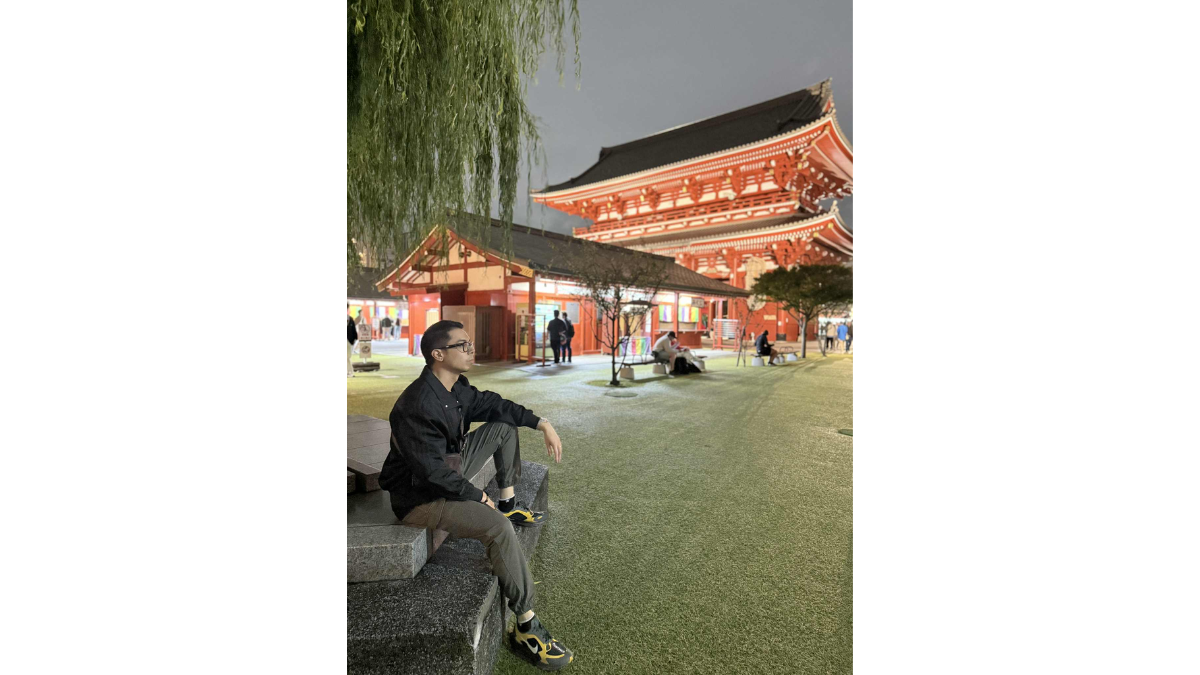
From the mighty feudal order of the Tokugawa Shogunate to a westernised political model. Come join me as we explore one of the most transformative economic overhauls in Asia’s history.
To Tokyo, Japan!
“I no naka no kawazu taikai wo shirazu
The frog in the well knows nothing of the ocean.
People who experience very little have a narrow worldview.
He that stays in the valley shall never get over the hill.”— Japanese Proverb

Tokyo, one of the most visited cities in Japan. From the historic streets of Asakusa and its iconic Sensō-ji Temple to the bustling Shibuya Crossing, the luxury of Ginza, and the colourful world of anime culture, this city offers a perfect blend of tradition and modernity.
Yet beyond the neon lights, ancient temples, and endless shopping lies something far deeper, a city that has a deep national historical significance to the nation’s prosperity. Tokyo stands as living proof of Japan’s remarkable journey of reformation, industrialisation, and modernisation.
Less than two centuries ago, Japan was largely an agricultural society. Today, it stands as the world’s fourth-largest economy.
And as I set foot in Tokyo, my heart and curiosity were already drawn to one destination, the Japan Exchange Group’s Tokyo Stock Exchange, the fourth-largest stock exchange in the world.
Join me as I explore Japan’s financial evolution. On how its capital markets have helped shape national prosperity, and how a nation rapidly achieved economic growth.
Because in every country that progresses, there lies a capital market, a place where capital is raised, trust is built, and a nation’s future is financed.
The Land of the Rising Sun

“Jaku niku kyō shoku
The weak are meat; the strong eat.
Survival of the fittest.”— Japanese Proverb
Japan, or Nippon, the land where the sun rises. A nation admired around the world for its samurai heritage and its once-powerful feudal order, led by the shogun.
Ah, the shogunate era, the age of the samurai. A time when Japan’s Edo period ushered in over 250 years of peace, prosperity, and cultural refinement. One of the reasons behind this long period of stability was a policy known as Sakoku — Japan’s self-imposed isolation under the Tokugawa shogunate.
This policy kept Japan closed to the world, controlling foreign influence and cutting ties with outsiders, particularly to curb the spread of Christianity. And for two and a half centuries, it worked. Japan thrived within its borders. They were economically self-sufficient, culturally unified, and politically stable.
But peace built on isolation could not last forever. In 1853, an emerging superpower nation appeared on Japan’s shores, the United States of America, arriving not with friendship, but with a fleet of steam powered black gunships. They came to open Japan’s doors to trade and diplomacy, and Japan had no choice but to comply.
That moment shattered centuries of isolation and forced Japan to confront a painful truth: they were vulnerable. The once-mighty samurai nation realised it could not defend itself against a possible Western colonial invasion.
And so began the great turning point in Japan’s history. The fall of the shogunate and the return of the emperor’s rule — after nearly seven centuries of feudal governance — marked the dawn of a new era. Under Emperor Meiji, Japan embarked on one of the most ambitious transformations in human history: the Meiji Restoration.
Determined to survive and prosper in a world dominated by Western empires, Japan looked outward. It learned from Europe. They adopted its political systems, studied its architecture, sciences, and languages. Foreign experts were invited to teach, and Japanese scholars were sent abroad to learn.
In just a few decades, Japan evolved from an agricultural nation into an industrial powerhouse. Yet, despite the rush toward modernisation, Japan never lost itself. Its culture, language, beliefs, and identity remained firmly intact.
A country reborn through adaptation, modern in structure yet deeply rooted in tradition.
The Japanese Yen: The New Rising Sun

“Ame futte ji katamaru
Rain falls, and the ground hardens.
Difficult times lead to strength.”— Japanese Proverb
Japan’s political and economic overhaul during the Great Meiji Restoration required more than ambition, foresight, and unity. It demanded a stable national currency to drive growth and efficiently allocate its resources.
In 1871, the Meiji government introduced the Japanese Yen under the New Currency Act, modernising and unifying the nation’s economy. Before this, Japan had no single national currency. It had a tangled web of feudal-era coins issued by regional domains.
The yen was modelled after the European decimal system, reflecting Japan’s new direction toward international standards. It was initially pegged to silver before adopting the gold standard in 1897. This move firmly anchored Japan within the global financial system.
But a currency alone couldn’t sustain a growing nation. A strong financial institution was needed to control the money supply, stabilise the yen, and ensure liquidity in the economy. Thus, in 1882, the Bank of Japan was established. It is a central pillar tasked with maintaining financial stability, regulating credit, and serving as the government’s fiscal backbone.
From there, Japan’s economic and political power accelerated rapidly. National pride swelled, and imperial ambition expanded. Japan began to, in their words, “liberate” several Asian countries from Western colonial rule, but not out of good heart. These actions were driven by national interest, specifically for resource acquisition—a coloniser indeed. Japan replaced Western dominance with Eastern imperialism, shifting the balance of power across Asia.
By 1942, the Japanese Empire had reached its peak, controlling much of East and Southeast Asia. Yet, just three years later, in 1945, it all came crashing down as the United States and its allied powers dismantled Japan’s empire, following its defeat in World War II.
The aftermath left the Japanese yen severely devalued. To restore order, the government fixed the yen to the U.S. dollar at 360 JPY, a rate formalised under the Bretton Woods Agreement of 1949. This system lasted until 1973, when the yen became a free-floating currency, reflecting Japan’s return to global economic strength.
The Japanese yen is far more than a medium of exchange. It carries the weight of Japan’s ambition, resilience, and adaptability. It symbolises a nation’s journey from isolation to industrialisation, from devastation to rebirth, and stands as a testament to how Japan rose once again, as the land of the New Rising Sun.
The Tokyo Stock Exchange (TSE)

In the heart of Tokyo’s financial district stands one of Japan’s most significant legacies of the Meiji Restoration, the Tokyo Stock Exchange.
Established in 1878, during a time when Japan was transitioning from a feudal to a modern industrial economy, the Tokyo Stock Exchange became a cornerstone of the nation’s financial evolution. Its purpose was clear: to facilitate trading in public bonds, government securities, and bank shares. Tools that would mobilise capital, attract investment, and fuel the country’s economic transformation.
This was the era when the Meiji government was relentlessly reforming every sector of society, from governance and the military to the economy and legal systems, all modelled after Western institutions. Japan understood that to modernise effectively, it needed not just technology and knowledge from the West, but also capital. And for capital to flow efficiently, a stock exchange was essential.
Fast forward to today, the Japan Exchange Group (JPX), which operates the Tokyo Stock Exchange (TSE), stands as the second-largest stock exchange in Asia and the fourth-largest in the world as of 2025. Its market capitalisation sits at $6.2 trillion with 3,924 listed companies.
Unlike most stock exchanges around the globe, the Tokyo Stock Exchange welcomes the public, free of charge, open from 9:00 AM to 4:30 PM, and yes, walk-ins are allowed. Naturally, I couldn’t resist the chance to visit. And as expected, it didn’t disappoint.
It’s one thing to read about a stock exchange in books; it’s another to stand where history, finance, and modern innovation meet — a living reflection of how Japan turned ambition into enduring economic strength.
Inside The Tokyo Stock Exchange

The public entrance to the Tokyo Stock Exchange (TSE) can be found at the west wing of the building. Upon entering, you’re greeted with airport-style security checks before heading to the information desk, where a receptionist provides everything you need for your visit, guidelines, a short briefing on the dos and don’ts, and a visitor’s guide map that is extremely handy.
That map became my compass. It showed where everything was, from exhibits to viewing areas, and gave me a glimpse of what to expect inside one of the most important financial institutions in Asia.
On the left and right sides of the information desk, there were a total of four statues that immediately caught my attention. They represent the four major pillars of any economy: industry, commerce, agriculture, and transportation & communication.
To the far right of the lobby lies the TSE Historical Museum. At first glance, it might look small, just one dedicated room, but once inside, it feels like stepping into a time capsule of Japan’s financial evolution. The space is packed with historical artefacts: brokers’ old uniforms and handwritten journals, maps of Tokyo from its early industrial days, and a miniature model of the original TSE building. There are photographs of influential businessmen who helped shape Japan’s modern economy. These were the powerful Zaibatsu families who defined the country’s early corporate landscape, and gained power, money and influence through industrialisation.
One of my favourite parts was seeing the old government bonds and stock certificates dating back to the late 1800s. There is also a wall full of stock certificates from the earliest Japanese public companies. I was genuinely fascinated by how much history has been carefully preserved. The museum beautifully divides Japan’s capital market evolution into five defining eras:
- Establishment of the Securities Market (1868–1913)
- Growth of the Securities Market (1914–1930)
- The Securities Market and the Wartime Economy (1931–1945)
- The Securities Market Begins Again (1945–1955)
- Introduction of Computers – 1950 onwards
Reading through each period felt surreal. It’s one thing to read about market history in books, but another to see it right before your eyes. You begin to understand how the stock market isn’t just about trading, it’s about nation-building. It fuels innovation, funds dreams, and connects ambition with opportunity.
Standing there, I felt a strong affirmation about my financial learning and belief. The stock market, despite its imperfections, is one of humankind’s greatest financial innovations. It’s not a game of speculation; it’s a mechanism that channels capital to entrepreneurs who dare to build. In return, it shares the fruits of the entrepreneur’s labour (price appreciation and dividends) with those who believe in them—the investors. It is, in its truest form, a democratic system of wealth creation.
That belief has shaped my own journey. Without the stock market, I wouldn’t have been able to participate in the growth and success of companies around the world. It’s a journey I’ve written about in my book, “Zero to Hero—The Rookie Investor’s Manifesto: Building Your Wealth From The Ground Up Through Stock Market Investing.”
If you’d like to dive deeper into my story and learn how to start your own investing journey, you can find it here:
📖 Amazon: https://amzn.eu/d/arCN4rz
Below are some of the photographs I took inside the TSE Museum, a glimpse into the heart of Japan’s financial history and one of the world’s most fascinating stock exchanges.


Financial Education is One of The Greatest Gifts You Could Give Yourself


I’ve always believed that financial education is one of the greatest gifts you can give yourself. Why? Whether we like it or not, money touches every part of our lives. It shapes the way we live, the choices we make, and even the freedom we feel. And yet, for something so deeply intertwined with our existence, very few people truly understand it.
To me, financial education isn’t about getting rich; it’s about understanding how money works, allowing us to live with it, not for it.
That’s why I write about finance, investing, and markets, not because I’m obsessed with money itself and the numbers, but because I believe knowledge gives people power and leverage.
The stock market is one of the greatest teachers of financial education. It’s where you learn how money grows, moves, multiplies and how capitalism ultimately works. Because making money (income), keeping money (saving), and growing money (investing) are three very different skills—and the stock market belongs to the third one.
Perhaps you might be wondering, “What am I discussing this and what does this have to do with the Tokyo Stock Exchange?” One word, education.
The Tokyo Stock Exchange (TSE) is one of only two exchanges among the world’s top ten that has a museum dedicated to teaching visitors about investing—The other one is China’s Shanghai Stock Exchange. On the second floor, you’ll find the TSE Plaza, a space built for financial education. It includes an investment simulator named “stock trading game” where you can experience stock trading in a fictional market, and exhibits that explain how world events affect stock prices.
As I walked through the TSE Plaza, I noticed a group of Japanese students, perhaps 13 to 15 years old, on a school trip. Though I couldn’t understand their teacher’s words, because she was speaking in Nihongo, it was clear they were being taught how the stock exchange works. Watching them made me smile. At that age, I had no concept of what investing was. My first introduction came years later, at 22, through my father. But these kids were seeing it first-hand, how capital flows, how markets work, and how it benefits the nation.
Not all of them would be interested. But that’s not the point. What matters is exposure, the chance to see what’s possible and understand the system that drives the modern world. Who knows, maybe one of those kids enjoys that visit, and it will spark something that changes their life.
But as much as that moment inspired me, it also made me a little sad. Because not every country gives its people this opportunity. Back home in the Philippines, the Philippine Stock Exchange (PSE) has its own museum, but it isn’t easily accessible. You need to request permission by email and wait for confirmation before visiting. There’s no open educational space like the one I saw in Tokyo, or in Bangkok, where the INVESTORY Investment Discovery Museum of the Stock Exchange of Thailand (SET) offers an interactive, public way to learn about investing.
If there’s one thing I’ve learned from my Stock Stops: Where Travel Meets the Stock Exchanges travels, it’s this: for a nation to build a strong and thriving capital market, it needs two things: government support and financially educated citizens.
Because when people understand how markets work, they don’t just invest in stocks, they invest in their country’s future.
There are other interesting things that I have seen during my visit, such as the open platform, the bell, the market centre and a small refreshments area. Below are additional photos from my visit.


Kabuto Shrine, The Guardian of The Securities Industry

I didn’t regret spending my whole morning and a portion of my afternoon at the Tokyo Stock Exchange (TSE). It was, by far, my most enjoyable “stock stop” since I began this journey. My only hope and wish is that every exchange in the world adopts an open museum and interactive learning centre like the TSE and SET. Imagine the lift in public financial literacy.
The Tokyo Stock Exchange even has a small museum shop beside the information desk. Everything was sold through a vending machine, which is so Japanese-like. Haha!
Before I left the exchange, I purchased a memento as a remembrance of my amusing visit. One item caught my eye: the Kabuto Shrine amulet. I hadn’t heard of Kabuto Shrine before that moment; it was a surprising discovery among the souvenirs.
The leaflet at the information desk explained what it is. The Kabuto Shrine was designated a town shrine in 1878, which is the same year the Tokyo Stock Exchange was established. It became a designated town shrine.

As written on the leaflet:
“In the same year (1878), Tokyo Stock Exchange Co., Ltd. was established and became the representative shrine, and since then, the shrine has been an important place of worship for the securities industry. When the trading floor was still in use, employees of securities firms in the area used to visit the shrine daily. Even today, many investors and others visit the shrine to pray for the success of their investments.”
After I purchased the Kabuto Shrine amulet, I went to visit the Kabuto Shrine—only about a 5-minute walk from the west wing entrance of the Tokyo Stock Exchange (TSE).
The Kabuto Shrine wasn’t large. Its land area was roughly the size of a typical Asian classroom. Yet, despite its modest size, it stood out. The shrine was well-kept, clean, and beautifully traditional, standing quietly amid the busy streets of Tokyo’s financial district.
Below are some photos I took of the Kabuto Shrine.


The Nikkei 225 Index

Every stock exchange has a benchmark index. For Japan, it is the Nikkei 225. It is an index that measures the performance of 225 highly capitalised and liquid publicly owned companies in Japan from a wide array of industry sectors.
The following are the 10 largest public companies under the Nikkei 225. These 10 have the largest influence on the price movement of the index.
| Company | Code | Industry | Quick Note |
| ADVANTEST CORP. | 6857 | Technology | A Japanese leading manufacturer of automatic test equipment (ATE) for the semiconductor industry, producing test systems for memory, system-on-chip (SoC), and radio-frequency (RF) devices used worldwide. |
| SOFTBANK GROUP CORP. | 9984 | Technology | A Japanese multinational investment holding company headquartered in Tokyo that focuses on investment management. It is known for its Vision Funds and major investments in global technology and Internet ventures, including a historically significant investment in Alibaba. |
| FAST RETAILING CO., LTD. | 9983 | Consumer Goods | A Japanese retail holding company that is one of the world’s largest apparel retailers, best known as the parent company of the global casual wear brand UNIQLO. |
| TOKYO ELECTRON LTD. | 8035 | Technology | A leading global Japanese company that supplies equipment for manufacturing semiconductors (integrated circuits/ICs), flat panel displays (FPDs), and photovoltaic cells (PV). |
| TDK CORP. | 6762 | Technology | A comprehensive electronic components manufacturer known for its magnetic technology. TDK produces components like sensors, magnets, and capacitors that are vital for products across the automotive, industrial, and consumer electronics sectors, including smartphones and electric vehicles. |
| KDDI CORP | 9433 | Technology | A major Japanese telecommunications operator. It provides a wide range of services, including communication services, ICT solutions, data center services for companies, and personal services like commerce and entertainment. |
| KONAMI GROUP CORP. | 9766 | Consumer Goods | A Japanese video game and entertainment company. It is known globally for popular franchises like eFootball (formerly Pro Evolution Soccer), Yu-Gi-Oh!, and Metal Gear. The company operates in digital entertainment, amusement, gaming systems, and sports. |
| FANUC CORP. | 6954 | Technology | One of the largest global makers of industrial robots and factory automation (FA) systems. The company specializes in products like CNC (Computer Numerical Control) systems, servo motors, lasers, and industrial robots for diverse manufacturing applications. |
| SHIN-ETSU CHEMICAL CO., LTD. | 4063 | Materials | One of the world’s leading chemical manufacturers, specializing in high-performance materials like silicon products (silicone fluids, rubber) and semiconductor materials (high-purity silicon wafers). |
| RECRUIT HOLDINGS CO., LTD. | 6098 | Consumer Goods | A global HR Technology (HR Tech) holding company headquartered in Tokyo. It operates a two-sided talent marketplace and owns major international subsidiaries like the job site Indeed and the employer review site Glassdoor. |
To Sum It Up

“Koi no takinobori
Carp climbing a waterfall
Like a carp climbing a waterfall — face adversity head-on, and through perseverance and endurance, achieve great success and personal transformation.”— Japanese Proverb
The Land of the Rising Sun tells a remarkable story of a nation’s transformation from a deeply agricultural society into a modern industrial powerhouse that, within mere decades, rivalled the Western colonial powers of its time.
This is why the Meiji Restoration remains one of the most studied and celebrated government reforms in Asian history. A testament not only to Japanese resilience, adaptability and strength but also to human beings’ capacity to build and redefine itself. That in times of crisis lies a strong resolve not just to survive but also thrive.
Yet, it also serves as a cautionary reminder. Japan’s boundless ambition eventually drove it toward imperial expansion, which led to its own downfall.
From its rise, fall, and resurgence, Japan’s economic and financial strength has continued to endure. Today, it stands proudly among the world’s top ten economies—one of only three Asian nations to do so, alongside China and India.
History is never just a story of the past; it’s both a mirror and a map. It reminds us that history often rhymes, and within those patterns lie the lessons, and perhaps even glimpses, of the possibilities in the future.
If you’re like me, someone deeply fascinated by investing, stock exchanges, and the world of finance, and if you ever find yourself in Tokyo, Japan, then I highly encourage you to visit the Tokyo Stock Exchange (TSE). It’s an experience that goes beyond numbers and charts. I have no doubt that, like me, you’ll find it both inspiring and deeply enriching.
Stock Stops: Fifth Stop Passport Stamped!

If you want to know more about the stock exchanges I’ve visited and plan to visit. See my Stock Stops page, where I shared details about my lifetime intention to visit each country with a stock exchange.
It is where my passion for finance and investing crosses with my increasing curiosity about the world.
“Life is about creating and living experiences that are worth sharing.”
— Steve Jobs
Knowledge is my Sword and Patience is my Shield,
Evan Louise Madriñan / elmads
This blog is for informational purposes only and not a Financial Recommendation. Not all information will be accurate. Consult an independent financial professional before making any major financial decisions.


0 Comments